

In 2014, the author of the blog “Srčna mama“ published a post about baby poop. The title made me smile at first, but as you follow more and more mums, you realize that poop is a big challenge for them. Is it diarrhea, is it green, or is it… So in my lectures at the “School for Expectant Parents,” during the talk “Newborn care and handling,” I liked to wrap things up—half joking, half serious—with a word or two about all the things that can “surprise” you in a diaper. Thanks to Teja for the poop 😀
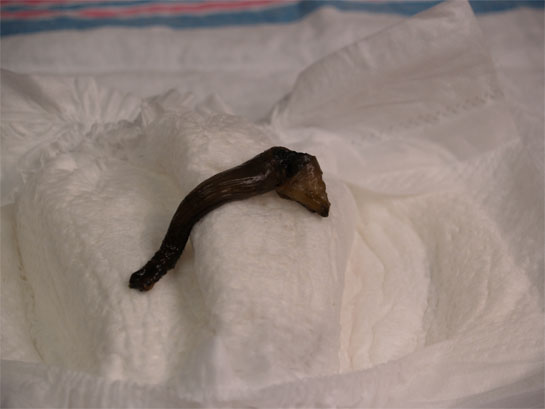
In the first days in the maternity ward, you’ll come across dark poop called meconium, which is dark, greenish-black, tar-like stool. It is passed within 24 hours after birth and “forms” from substances the newborn swallowed in the womb. Some of you may also come across a meconium plug, which is hard and is usually passed spontaneously before the meconium; only rarely does it cause a blockage.

Transitional stool changes quite a bit. Between the second and fifth day, the stool becomes lighter, somewhere between green and orange. For mum, transitional stool is also a sign that the baby has started feeding and that their digestion is doing just fine.

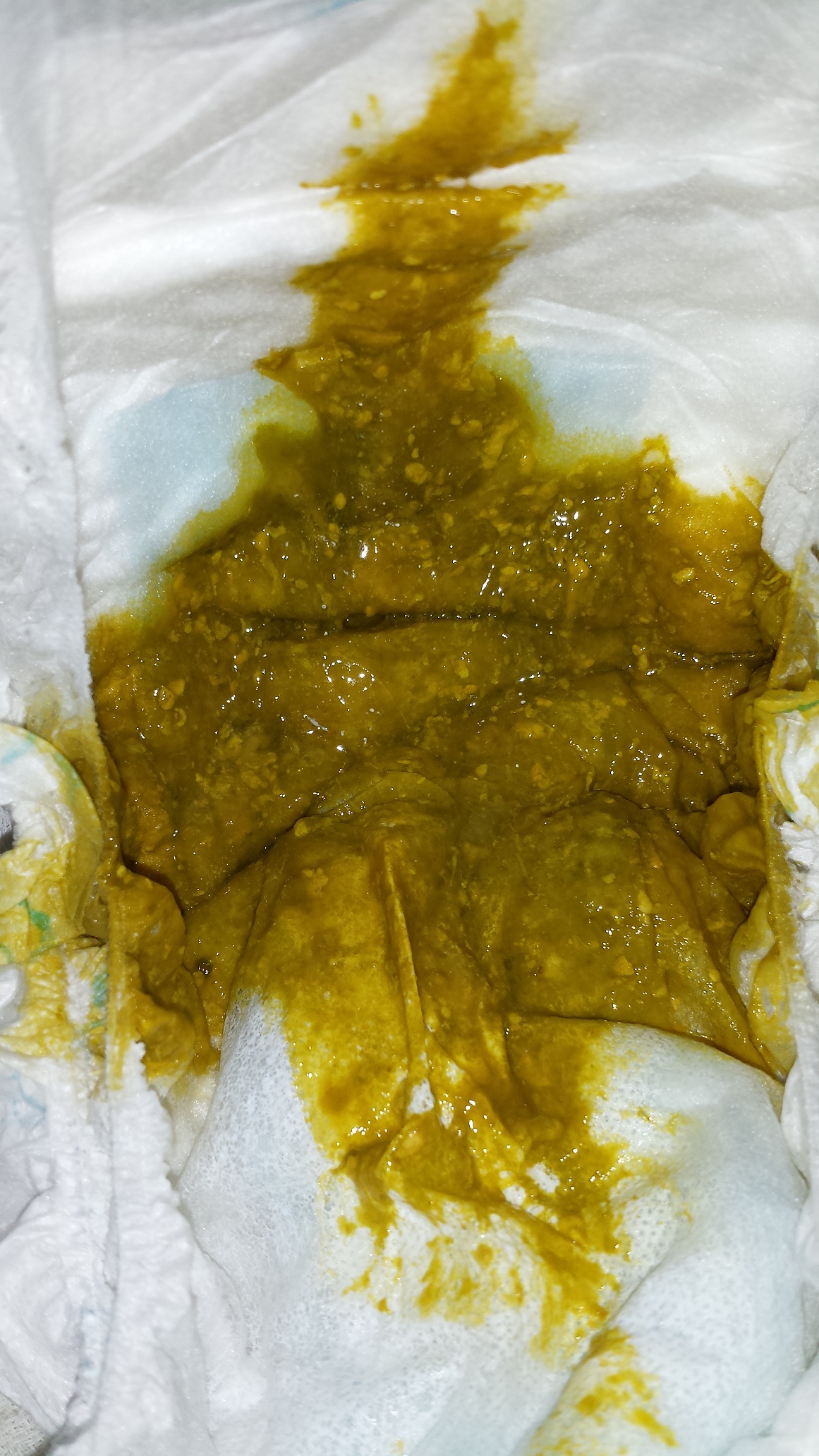
Breastfed baby stool ranges from green to mustard-colored, with various bits that can look like little pieces of yogurt. This is not diarrhea.


Stool when mum has more foremilk, so you can see it’s more greenish and mucousy. Foremilk is what comes first and is more watery. If mum has a lot of it, the stool is more greenish and has quite a bit of mucus. This can also happen with stronger cramps. More mucus can also be seen in a baby who drools a lot.

Formula-fed baby stool is similar to peanut butter or dark mustard, with small bits.

Bloody stool can appear as:
- Normal poop with traces of blood, most often a sign of an allergy to milk proteins.
- Poop with constipation and a little red blood—most often due to small hemorrhoids or fissures.
- Diarrhea mixed with red blood—a bacterial infection.

It can also be a completely normal occurrence caused by the mother’s hormones that the baby is releasing; it usually happens around day 3 after birth.


Black stool is found when we give the baby iron supplements; it can also be dark green. If the baby isn’t taking supplements and you notice this kind of stool, it’s a good idea to consult your midwife (or the community nurse or pediatrician).

Stool with food remnants appears when your baby starts eating solid foods, especially typical for those who practice baby-led weaning (click).

Constipation – this kind of poop is usually like small pellets. Your child will probably have trouble pooping.

Diarrhea is runny, watery poop; it can be yellow, green, or brown.

Gray poop – almost always indicates liver problems; this baby needs to be checked by a pediatrician.
 ??????????
” data-medium-file=”https://mojababica.si/noviteta/wp-content/uploads/2025/07/1946345.jpg?w=260″ data-large-file=”https://mojababica.si/noviteta/wp-content/uploads/2025/07/1946345.jpg?w=260″>
- In the maternity ward, a newborn will poop after almost every feed. This changes on days 3–4, and they poop about 3–4 times a day. That’s also when you’re discharged to home care. Don’t let this scare you—your baby isn’t constipated.
- In breastfed babies, it can happen that they don’t pass stool for up to 7 (–10) days. This is also not a reason to panic if the baby is feeding normally, in a good mood, and doesn’t have a tight, tender tummy. When they do poop, it’s usually a larger amount. Don’t give your baby oils, sweetened water, etc. If they haven’t passed stool after a week, inform a healthcare professional.


