
Membrane sweeping is one of the mechanical methods used to encourage labour, and it has been used for centuries. It is a relatively simple procedure, but it requires a well-considered decision, proper technique, and a well-informed pregnant woman.
What is membrane sweeping?
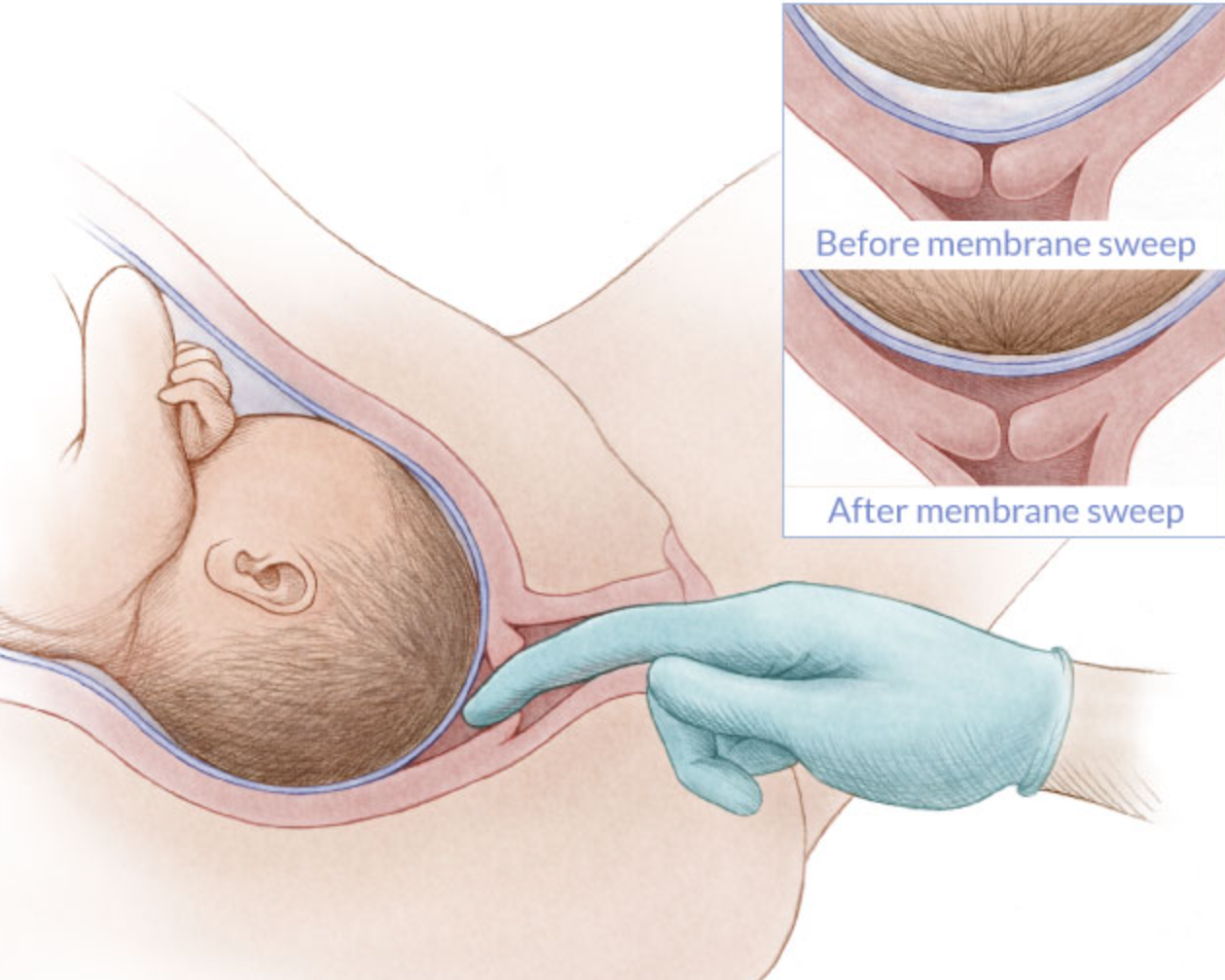
Membrane sweeping (in English membrane sweeping or stripping) is a procedure in which, during a vaginal exam, the provider puts on a sterile glove and uses a finger to separate the amnion (the fetal membrane) from the lower part of the uterus. This mechanical stimulation triggers the release of prostaglandins—hormones that play a key role in starting labour. It is considered a milder form of induction (induction = starting labour).
You can learn more about labour induction and the different methods of induction, along with all the other content, in the online class Birth.
When is membrane sweeping used?
This method is usually performed in pregnant women:
- At term or past the due date (after 40 weeks), to encourage labour to start and prevent a post-term pregnancy.
- With certain indications, such as high blood pressure, diabetes, or slowed fetal growth.
It is important that the cervix is at least partially open, otherwise the procedure is difficult to perform. If the cervix is closed, cervical massage can be used as a preparatory method.
How is the procedure done?
The procedure is performed in a gynecological position during a vaginal exam. The provider uses circular movements to separate the membranes from the uterine wall. The procedure itself usually takes a few minutes, but it may be somewhat uncomfortable for the pregnant woman or cause mild pain.

What can you expect after the procedure?
- Light bleeding or discharge. (Also read: Mucus plug).
- Cramps similar to menstrual pain.
- Irregular contractions.
Indications and contraindications
Membrane sweeping is recommended when:
- The pregnancy goes beyond 41 weeks.
- There are mild risks that require labour to start earlier.
The procedure is not suitable when:
- The baby is in a breech or transverse position.
- Placenta previa is present or there are other placental issues.
- There are signs of infection or active genital herpes.
Before any procedure, the pregnant woman must receive clear information and have the opportunity to be involved in the decision.
In the online class BIRTH you will also find a section on birthing people’s rights, communication with healthcare professionals …
Studies show that membrane sweeping is a safe and effective method when performed for appropriate indications. In rare cases, it can cause unpleasant side effects, such as heavy bleeding or rupture of the membranes.
Membrane sweeping does not always guarantee that labour will start, but it can:
- Shorten the time to spontaneous onset of labour.
- Reduce the need for pharmacological induction of labour.
- Increase the chance of a natural birth.
More research has shown that the method is especially effective when used together with other methods of labour induction.
Key questions for your healthcare provider
If the procedure has been suggested to you, consider the following questions:
- Why do you recommend membrane sweeping in my case?
- What are the chances that labour will start after this procedure?
- What are the possible side effects?
Membrane sweeping is one option for encouraging labour, but it is not suitable for everyone. It is important that you, as a pregnant woman, are informed and involved in decision-making, as this will make it easier for you to take part in decisions that affect you and your baby.
Membrane Sweep: Benefits, Risks & How It Works (+ photo within the text)


